Someone asks your zodiac sign, and you answer with the one you have always known. Then a Vedic chart tool gives you another sign. A horoscope asks for your Moon sign, while an introductory article talks about the rising sign. These may all be referring to different things.
The simplest first step is to ask: which placement, and which zodiac system?
The Sun sign
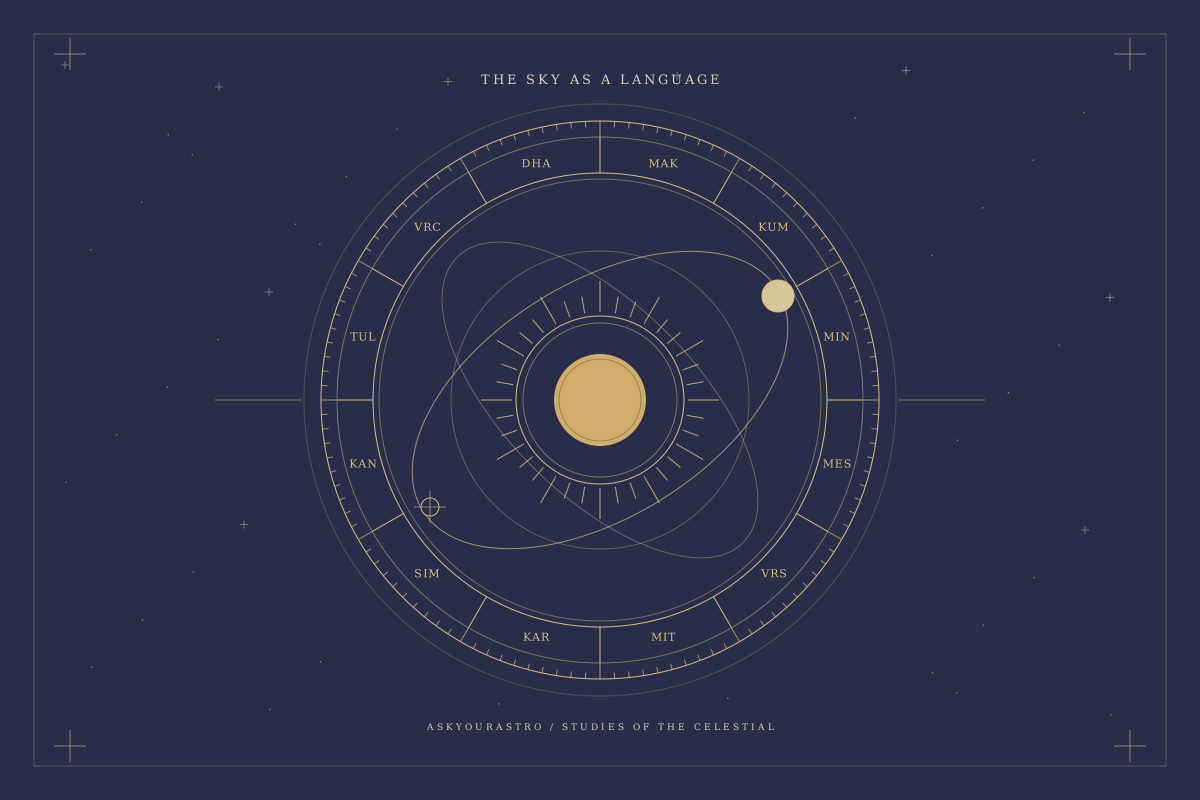
A Sun sign describes the zodiac section occupied by the Sun at a given time. Popular date-range lists usually refer to a tropical Sun sign. A Vedic chart commonly uses a sidereal zodiac, which can place the Sun in a different sign.
Approximate date ranges are convenient introductions, but people near a boundary should not treat them as exact calculations. The relevant time and the chart convention still matter.
The Moon sign
The Moon sign, often called Chandra rashi, is the zodiac section occupied by the Moon at the time of birth. It is a common reference point in Vedic horoscope writing and some traditional interpretive techniques.
The Moon moves through signs more quickly than the Sun, so assuming its placement from a birth date alone can be unreliable near a sign change. Use a tool that accepts time and location, and retain any uncertainty in the birth details.
Traditional writers often connect the Moon with mental and emotional life. That is an interpretive association, not a psychological assessment or a reliable way to label another person.
The rising sign
The rising sign is the sign containing the ascendant, or lagna: the point rising on the eastern horizon for the given time and place. It helps orient a natal chart and its houses.
The ascendant is sensitive to birth time and location. If you only know an approximate time, say so. A chart can still be explored educationally without pretending its most time-sensitive information is certain.
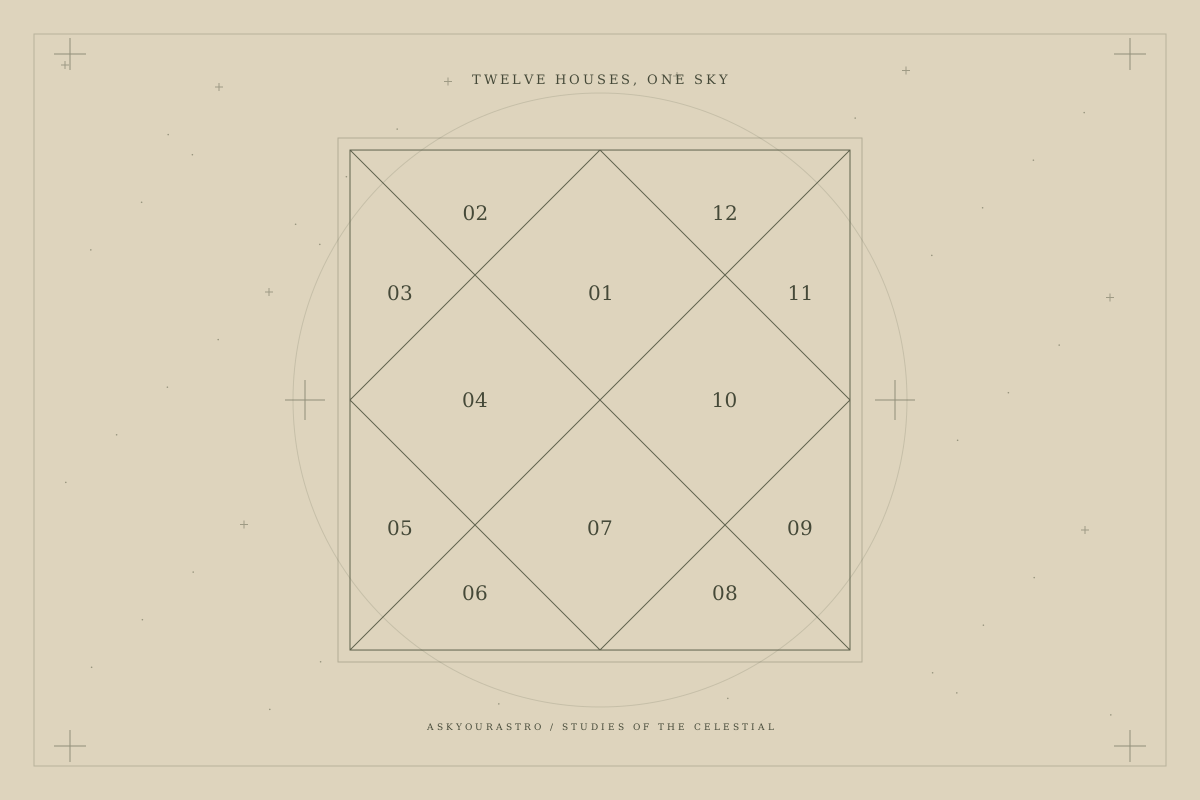
Our birth-chart guide explains how to locate the ascendant in common chart layouts.
Which horoscope should you read?
Read the publication’s instructions. A column written for Moon signs should be approached using the Moon-sign convention it specifies. A rising-sign column uses a different starting point. Mixing them without noticing can create confusion.
Broad sign-based horoscopes describe large groups. They cannot account for every natal chart or personal circumstance. Treat them as general reflections, rather than tailored forecasts.
Compare like with like
When two tools disagree, check the placement first: Sun, Moon, or ascendant. Then compare zodiac system, ayanamsha, date format, time zone, and coordinates. Differences in conventions can explain a disagreement before interpretation even begins.
Keep a note of the settings beside any saved chart. Learning to name the reference point clearly is more useful than trying to choose one sign as your only “real” identity.
If you want another layer of lunar vocabulary, continue with the introduction to nakshatras.
TAKE THE NEXT STEP
Bring your questions with you.
Learn about AstroSaathi’s Android project and its approach to personal astrology conversations.
Explore AstroSaathi